Choosing an ABA therapy center can feel overwhelming. You are trusting a team to spend significant time with your child, understand their needs, and help them develop skills that matter in everyday life.
A polished website or convenient location can help you narrow your search, but they do not tell you everything you need to know.
When deciding how to choose an ABA therapy center, look at how the center creates treatment plans, involves families, supports children, measures progress, and adapts therapy as children grow.
Most importantly, ask questions. A quality ABA provider should be willing to explain what therapy will look like and why they recommend specific goals for your child.
How to Choose an ABA Therapy Center That Provides Individualized Care
Start by asking how the provider creates treatment plans.
Applied behavior analysis, or ABA, should not look exactly the same for every autistic child. A Board Certified Behavior Analyst, or BCBA, typically completes an assessment and uses that information to develop individualized goals.
Those goals may address areas such as:
- Communication
- Social skills
- Safety
- Play
- Daily living skills
- Following routines
- Greater independence
For example, one child may work on asking for help. Another may practice getting dressed or following a morning routine. An older child might focus on social situations or preparing a simple snack.
The Behavior Analyst Certification Board’s Ethics Code requires behavior analysts to involve clients and relevant stakeholders in goal selection and to individualize behavior change programs.
Ask the provider how they decide which goals are important. You should hear an answer that starts with your child.
Look at Who Will Oversee Your Child’s ABA Therapy
When learning how to choose an ABA therapy center, find out who will oversee your child’s treatment.
A BCBA may assess your child, develop the treatment plan, supervise therapy, review progress, and make changes to goals or strategies. Other members of the therapy team may work directly with your child throughout the week.
Ask questions such as:
- Who creates my child’s treatment plan?
- How often will the BCBA observe my child?
- How are therapists supervised?
- Who should I contact with questions?
- How will I receive updates about progress?
You should understand who is responsible for your child’s care and how the clinical team works together.
Choose an ABA Therapy Center That Involves Your Family
Parents know things about their children that a therapist cannot learn from an assessment alone.
You know what mornings look like at home. You know which activities your child loves, what routines feel difficult, and what skills would make everyday life easier.
That information matters.
The American Academy of Pediatrics has emphasized family involvement and individualized goals when planning services and supports for autistic children.
Ask how parents participate in treatment planning and how often you will communicate with the clinical team.
Family involvement can also help connect therapy with everyday life. If your child practices asking for help during ABA, for example, the BCBA may show you ways to support that same skill during routines at home.
Tour the ABA Therapy Center
Whenever possible, tour a center before choosing a provider.
Pay attention to more than how the building looks.
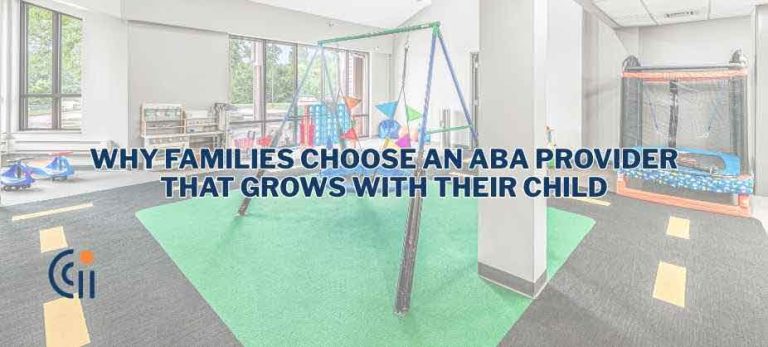
Consider how the environment feels. Watch how staff members interact with children. Ask how the center creates opportunities for play, movement, quiet time, learning, meals, and social interaction.
You might ask:
- What does a typical day look like?
- Where will my child receive therapy?
- How do you incorporate play?
- What happens if my child needs a break?
- How do you support sensory needs?
- What safety procedures do you follow?
- How do you help new children become comfortable?
You want a center where your child can learn while also feeling respected, supported, and comfortable.
Ask How the ABA Center Measures Progress
ABA providers should not rely only on general impressions of how therapy is going.
ABA uses observation and measurement to understand whether a child is learning a skill and whether treatment strategies are working. Providers can use that information to decide whether they should continue, change, or replace a strategy.
For example, if your child is learning to get dressed, the team might track which parts of the routine your child completes independently and where they still need help.
The American Academy of Pediatrics recommends systematically measuring progress and adjusting intervention when needed.
Ask how often the BCBA reviews progress and how the provider shares that information with families.
Find Out How the Center Approaches Communication and Behavior
Ask how the provider responds when a child has difficulty with a situation.
Good ABA therapy should look beyond the behavior itself. The clinical team should work to understand what may be contributing to it and identify useful skills the child can learn.
Imagine a child becomes upset every time play ends.
Instead of focusing only on stopping the reaction, the team might look at the entire situation. Does the child understand what comes next? Do they need more support with transitions? Could they learn to request more time or communicate that they need a break?
The Centers for Disease Control and Prevention describes behavioral approaches such as ABA as methods that examine what happens before and after a behavior and use that information to support learning.
Ask prospective providers how they determine why a behavior occurs and how they teach communication and other useful skills.
Consider Whether the ABA Provider Can Grow With Your Child
Parents often begin their search by thinking about what their child needs right now.
It can also help to think a few years ahead.
Some ABA programs focus primarily on early intervention. Ask each provider what ages they serve and what happens when children become school age or teenagers.
A three-year-old may work on early communication, play, or following simple routines. A seven-year-old may need support with friendships, safety, or daily living skills. A teenager may focus more heavily on communication, self-care, and greater independence.
Changing providers can sometimes be necessary. However, choosing an organization with a broad age range may give your family the option to maintain greater continuity as your child’s goals change.
Circle City ABA provides ABA therapy for children from 18 months through 17 years.
Ask About Scheduling, Insurance, and the Enrollment Process
Clinical quality matters most, but practical details matter too.
Ask whether the provider accepts your insurance and whether someone will help you understand your benefits. Find out whether there is a waitlist and what steps you need to complete before therapy begins.
You can also ask about available schedules.
The provider may recommend a certain number of therapy hours based on your child’s assessment and clinical needs. Ask why they recommend that schedule and what a typical week would look like.
Before enrolling, make sure you understand the assessment, authorization, scheduling, and insurance process.
Questions to Ask When Choosing an ABA Therapy Center
Bring a list of questions when you tour or speak with an ABA provider.
Consider asking:
- What ages do you serve?
- Who will oversee my child’s treatment?
- How do you choose therapy goals?
- How will you involve our family?
- How often will we receive progress updates?
- How do you incorporate my child’s interests?
- How do you support communication?
- How do you respond when my child needs a break?
- How do you measure progress?
- What safety procedures do you follow?
- How does therapy change as children get older?
- What insurance plans do you accept?
- What happens during the ABA assessment?
- What does a typical day at your center look like?
Do not worry about asking too many questions. You should understand the program before trusting a provider with your child’s care.
FAQ About How to Choose an ABA Therapy Center
Should I tour an ABA center before enrolling?
When possible, yes. A tour gives you an opportunity to see the environment, meet staff, learn what a typical day looks like, and ask questions about your child’s care.
Should every ABA center offer the same type of therapy?
No. ABA treatment should be individualized. Your child’s goals and recommended services should reflect their strengths, needs, preferences, age, and family priorities.
How do I know whether an ABA center is a good fit?
Look for individualized treatment, qualified clinical oversight, clear communication, family involvement, progress measurement, and an environment where your child is treated with respect. You should also feel comfortable asking the team questions.
Should I consider the ages an ABA provider serves?
Yes. A provider’s age range can affect how long your child can remain with the organization. If continuity matters to your family, ask whether the provider supports school-age children and teenagers in addition to young children.
Choose Circle City ABA for Your Child
Choosing an ABA therapy center starts with finding a provider that sees your child as an individual.
At Circle City ABA, we provide individualized ABA therapy for children ages 18 months through 17 years. Depending on your child’s needs, therapy may focus on communication, social skills, safety, daily living skills, school readiness, or greater independence.
Our clinical teams use play and meaningful everyday activities to create learning opportunities. Families remain involved throughout treatment, and goals can change as children develop new skills and priorities.
If you are comparing ABA therapy centers, we invite you to learn more about Circle City ABA. Our admissions team can answer questions, explain the assessment process, help verify insurance benefits, and connect you with a center near you.
Contact Circle City ABA at 317-641-0204 or visit circlecityaba.com to start the conversation. Circle City ABA serves families in Arizona, Georgia, Indiana, Iowa, and Nebraska.
Sources
- Behavior Analyst Certification Board: Ethics Code for Behavior Analysts. Provides professional standards related to individualized services, client and stakeholder involvement, treatment selection, and behavior analytic services.
- American Academy of Pediatrics: Identification, Evaluation, and Management of Children With Autism Spectrum Disorder. Discusses individualized treatment goals, family participation, progress monitoring, and autism services.
- Centers for Disease Control and Prevention: Treatment and Intervention for Autism Spectrum Disorder. Provides an overview of behavioral approaches, including applied behavior analysis.
- National Institute of Child Health and Human Development: Autism Spectrum Disorder Treatments. Reviews behavioral and other treatment approaches used to support autistic children.